

On being disabled
An Interview with Dr. Akilah Cadet


My Friends-
First off, I hope everyone is doing better than me today. The long COVID/sinus infection combo is kicking my butt currently. I am recovering, but my patience and capacity for illness is spectacularly low at the moment. I am accepting all the warm thoughts, healing energy, and prayers this week.
A few weeks ago, Dr. Akilah Cadet interviewed me on what it’s like to be an able bodied person who suddenly finds themselves disabled. She is an entrepreneur, author, and disability justice advocate. When she heard about my long COVID, she immediately reached out to offer her support, which has been invaluable in this season of life. So, I’m proud to be sharing our interview as today’s stack, just below. I hope it helps you to think more deeply about disability, ableism, and how these very real experiences impact how we live.
I first encountered Akilah’s work several years ago and have been following her story and work since. This is my invitation to you to do the same! In fact, Akilah has been such a great friend to me that we are giving away two copies of her book! Simply comment on this essay to enter the giveaway.
Wishing you a joyful and compassionate end to your week. xxMarisa
—---
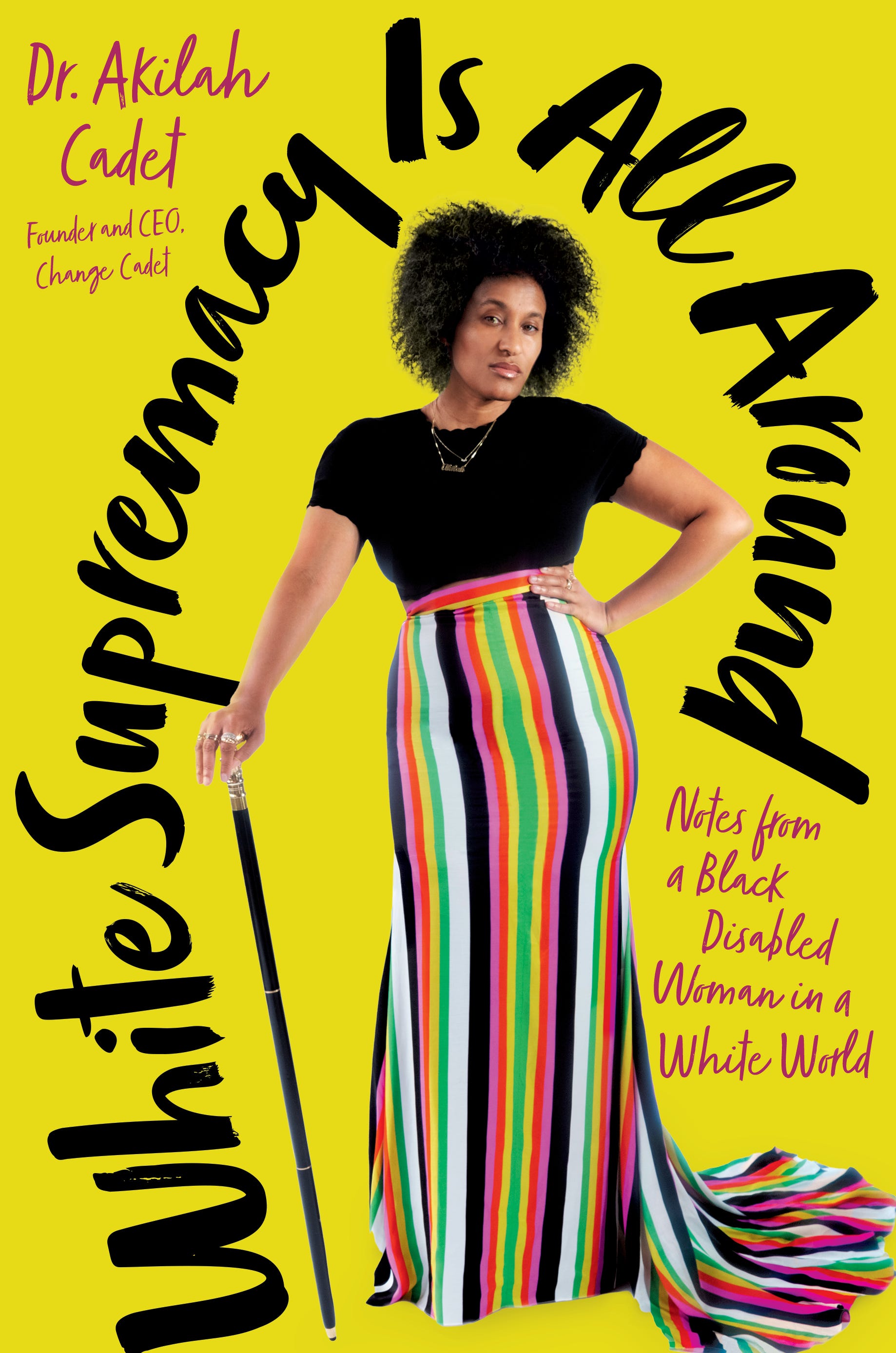
Like many, I found Marisa Renee Lee’s book while grieving. Grief is Love: Living With Loss spoke to my intersectionality. She spoke about caretaking of her disabled mother, and I thought about both how I am the CEO of my own disabled body and also how I took care of my grandmother, who I dedicate my book to. She spoke about miscarriage and I realized I never fully was able to grieve my miscarriage as it was the murder of George Floyd and very busy for my business. I even picked up the book when my dog, my baby, my Marley, my little guy who was my caretaker passed away. I watched Marley slowly die, like my grandmother, like the pregnancy that never fully developed, I knew that I would always grieve for them.
Marisa told her story as a successful, powerful Black woman in this very white America. That was me. She was me. I powered through her book in two days. I could not stop myself from turning the page. She saw me, and yet I had no idea she already knew me. See, Marisa had been following me for years on Instagram and I had no idea. When she commented on the post where I made the connection, I double checked the book that is always by my bedside against her handle and did a Google search just to make sure it was really her. Turns out she was there for me as much as I was there for her. With a new life of long COVID, Marisa has embraced her disability. So much so she talks about it in her new book Waiting for Dawn: Living with Uncertainty. We recently talked about her new book, our intersectionality and how we keep being amazing Black disabled women.
Dr. Akilah Cadet: I’m so excited to talk to you today because you are a wonderful incredible person. The way in which you see grief is multifaceted; it’s not just the end of life, there’s so much more that comes with it. Now you are in a position where you have been given the gift of long COVID. The gift that keeps on giving. I view long COVID as a gift and a curse in so many ways, from the experience itself to the diagnosis from society and so much more. The gift is long COVID has helped us have a conversation around dynamic disability. Dynamic, meaning apparent and non-apparent disability. The reason why I say it’s also a curse is that it took something that affected non-disabled individuals to have this conversation. It was needed at a time [during the pandemic] where accommodations were happening for everyone since people who are privileged enough could work at home. So what does this new identity mean for you having long COVID?
Marisa Renee Lee: You’re right, gift and curse. It has been really interesting and it’s very much been an evolution in terms of identity. I would say the first couple months I was as deep in denial as one could possibly go. I knew I wasn’t well after getting COVID, but I also really didn’t want to have long COVID. I saw a million doctors. Had all the diagnostic tests and did all the things that we do when we want to run or hide from the truth. I didn’t really reckon with how sick I was and the fact that I was at least partially disabled, which is probably the language that I would use today. I didn’t accept that as a part of my identity until, um, it was around November of 2024. Yes, I first got a vaccine injury in January of 2024. I got a COVID infection for the first time during April of 2024. So I’d been sick the entire year, but it took till the end.
I had a call with the disability justice program officer at the Ford Foundation. We worked together in the White House. When I announced publicly that I finally was ready to claim long COVID out in the world, the program officer gave me a call. I sat on my porch talking to her for an hour. She said, “I’m going to ask you three questions. Does your illness change the way you dress?” The answer is yes. Like, I have to wear compression clothing and that’s pretty much non-negotiable. “Does your illness change the way you eat?” Once again, the answer is yes. Like, I have to have high protein meals. I have to make sure that I’m eating at regular intervals for all of the medications I have to take, and I have to consume between four and five thousand additional milligrams of sodium each day. “Does your illness affect the way that you engage with your family and friends?” The answer was absolutely yes. Back then I couldn’t even pick up the phone and talk to my friends because it was too exhausting and would lead to too much chest pain and shortness of breath and she was like this means you are disabled.
“This is how we define disability,” and I was like oh and then I just cried for like an hour but at least I had the clarity. I still struggle with that sometimes because, you know, I see that I am getting better. I know that I am not as sick as I was a year ago. And so, like I also worry about taking–and this is sort of a weird way to think about it–but I sometimes worry about taking accommodations or help or support away from other people who maybe need it more than I do.
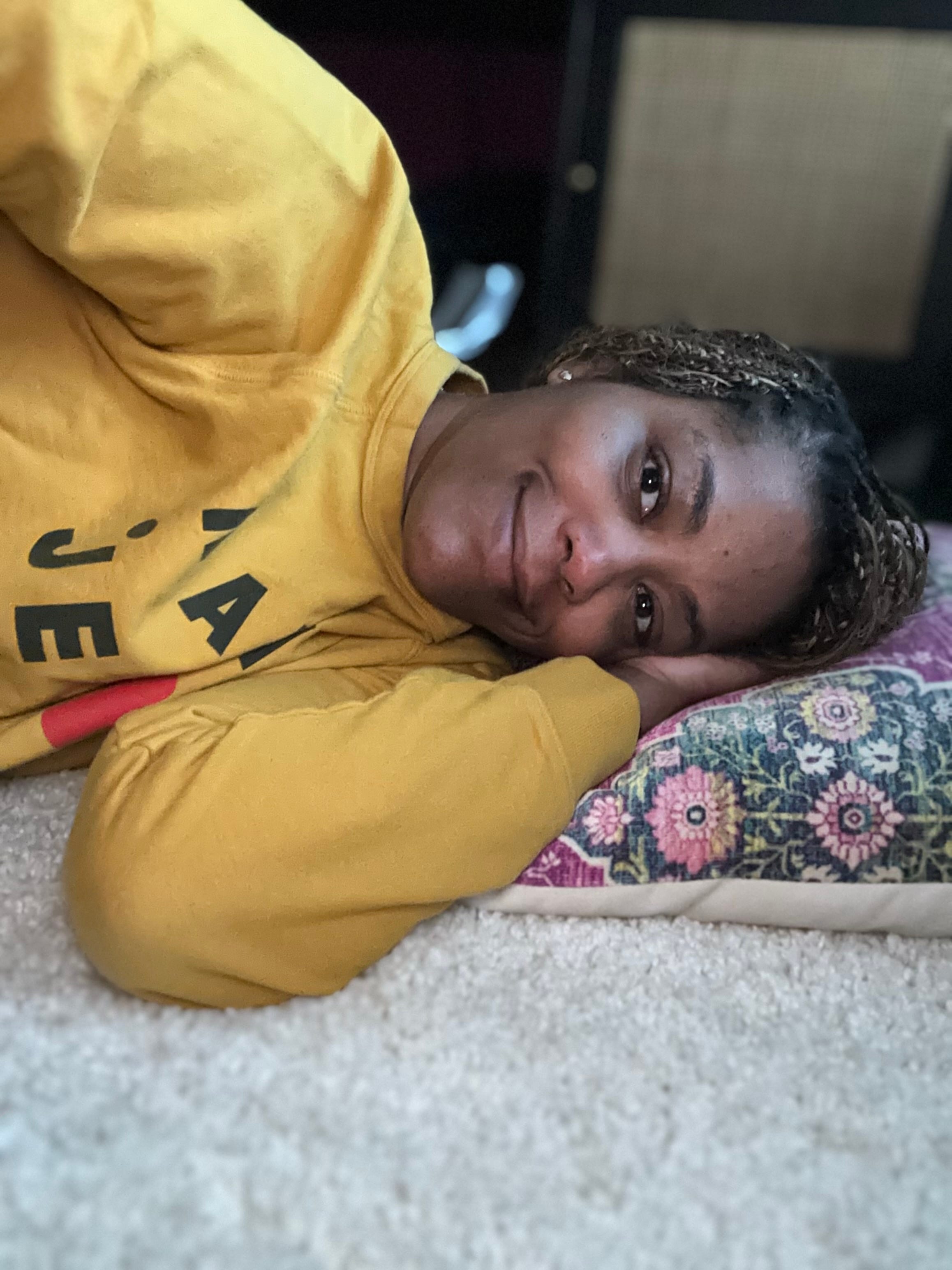
Dr. Cadet: When were you openly disabled?
Marisa: Oh, that’s a good question. You know what? I know I’ve obviously shared a lot about the fact that I have long COVID. I don’t know if I have used the word disabled in my Substack or social media so far I’m not sure if I have. I do write about [disability] in Waiting for Dawn. I write about the conversation I just shared coming to terms with the fact that I have to live my life differently. And one of the biggest and hardest things for me was figuring out how to make motherhood work. There are certain things that I can always do. I can always comfort a crying or sad or sick child. But I couldn’t pick up my kid for like over a year.
I spent an entire week resting and conserving energy to take my son strawberry picking. I was feeling strong enough. So we went to the farm and the thing that I hadn’t planned for was the amount of walking that would be involved t. It was a seven to ten minute walk from where the cars were parked to the strawberries. I asked this nice hippie white guy “is there any alternative?” sharing that I am disabled with long COVID. I was like, “I know I can’t do both;” Like, I can’t walk that far and do this activity with him. But there was no other option and so we had to leave. I will never forget this experience. I got my son in the car and didn’t want to cry in front of him because it’s a little bit too complicated to explain and I don’t want him to be sad because I am sad. So I just took a deep breath, took him to the playground, and cried about it later.
I sent the farm a message on Instagram. This was less for me and more of thinking about other people. I was thinking about my mom, honestly. They reached out and apologized and shared their plans going forward to be more disability friendly. It was detailed, a three paragraph Instagram message from them. And so I think it is super important for people like myself who are in positions of disability and more privilege to hold other people accountable.
Dr. Cadet: Exactly. But you realize with this new identity the spaces and places that you wouldn’t even think would show up because you’re adjusting to it. Now you’re in this position of lived experience and you know how folks with disabilities are treated . Now you’re in that same body as your mom, seeing how you’re treated, as you share in your first book Grief Is Love: Living With Loss. So, what have you learned particularly about being a Black woman with disability?
Marisa: I’ll say one of the big things that I have been challenged by, and I write a bit about this in Grief Is Love and I’ve written about it in different articles, is just the concept of safety and how much less safe we are as Black people, as Black women. All of the statistics point to violence whether by state actors or regular people, like, sexual violence, missing person’s cases–all of the ways we are categorically less safe. On top of that we are unseen.
Throughout my life I have found a lot of ways to be seen and the center of attention. I’ve always assumed that being physically strong was something else that would help keep me safe. And that disappeared seemingly overnight and it’s stayed gone. I’m somebody who grew up playing sports, not very well, but I played them and worked out five, six days a week my entire life. I have not successfully completed a workout of any length since July or August of 2024. But instead I’m just trying to be good about sitting in the discomfort and being honest about it and figuring out what this uncomfortable space has to teach me? Because I can’t change the fact that I can’t go get on my Peloton right now as that would be devastating and foolish. So that has been one of the big things, how it’s sort of re-emphasized how incredibly unsafe we are and how much we have to fight to be seen because when you don’t have the energy for that anymore because you’re unwell, you kind of just have to accept not being seen at all.
And that was especially hard in the fall of 2024 and the first half of 2025. I write about this in Waiting for Dawn as well. I kept thinking about it as a feeling of FOMO (fear of missing out), but then I realized it actually wasn’t FOMO. It wasn’t about missing out. It was about a fear of being forgotten, and that is devastating. The loneliness that comes with disability and a body that doesn’t work the way that people expect bodies to work. It’s just really hard.
Dr. Cadet: I always tell people that the only safe and supportive space for me is my home. As soon as I go outside, I can now be discriminated against because I’m a woman, discriminated against because I’m a Black person, discriminated against because I’m disabled, or a combo platter of those things. From my car to my cane they are both an appendage of my body to help me navigate the spaces not designed for me. But you also mentioned something else, which is loneliness. And that’s something that’s come up with folks with long COVID who can understand how disability shows up, dynamic disability, apparent, non-apparent disability. So, in what ways are you navigating loneliness and does it impact your mental health?
Marisa: It definitely did have a pretty significant impact on my mental health. I would say August of 2024 probably until February, March of 2025, those were some of the worst, hardest months of my life. Like hands down. In the past when I’ve had hard things come my way, and for the most part I’ve either seen them coming or knew that they were a potential outcome. I knew my mom was dying. I knew my mom wasn’t going to have a long life before she even got fucking breast cancer because she had MS and like I assumed it would take a toll. It’s progressive. Like with our pregnancy loss and infertility and all of that stuff like it’s like you know that that is something that happens to a lot of people. So those types of experiences have become much more normalized and they were more expected.
This caught me completely fucking unaware. And there was also just, and there still is, so much that we don’t know and don’t understand about this illness. And so in addition to being super sick, there’s no clear plan of action, set of medications or any kind of protocols. There isn’t even full clarity or alignment around what tests you should administer to confirm that somebody has long COVID, how do you know when it’s over. No timelines, nothing.
I just felt so incredibly lost and my friends felt awful. They were constantly checking in, sending stuff, offering this thing, doing that thing. I have an amazing, amazing, amazing, community. Were there people who I expected to show up who didn’t show up at all? Of course, that always happens. But then there are always the people who surprise us and it’s amazing and wonderful, but I couldn’t even keep up with their outreach because I was too weak. And I’d never been like that before.
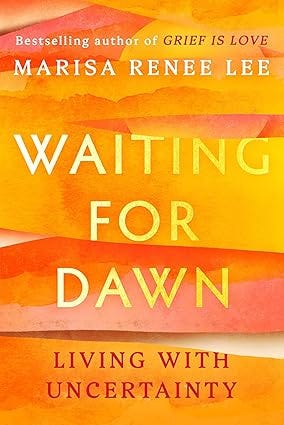
Dr. Cadet: You have this new book coming out called Waiting for Dawn: Living With Uncertainty. In this book, you make a decision to share your new identity of being disabled. Tell folks what they can expect.
Marisa: Waiting For Dawn is all about how to live when something challenging shows up. That is unexpected. That is hanging out for some indeterminate period of time, whether it’s a health challenge like the one that I experienced or, say, a job loss. You know, so many Black women I’ve spoken to in the last few weeks are either, frankly, accepting jobs that are beneath their skill set and level of experience or they are not finding the work that they do in the world really being welcomed in the world right now. And that’s hard. It could be a marital challenge. It can be the caregiving that you’re doing for an elder and aging family member. All of the above. It’s uncertainty. It is hard. It is persistent stress and overwhelm and usually some amount of fear because you have no idea what the future is going to look like.
In Waiting for Dawn, I try to provide not a road map, but more of like a compass and a friendly voice to help you figure out how to navigate in those moments. For me the biggest point of uncertainty was life with long COVID and having to accept that I had become or that I am the person that I feared for most of my life which is specifically the identity of sigma. You know I had one [mother], she was perfect. I loved her. But I did not want to be [a sick mother] because I knew, I know, what it feels like to be the child of a parent who is suffering. And so it’s been a process. It’s been really hard. I wrote the book while I was still very much in the thick of it and I share the things that both helped me and are also supported by research and evidence around what we can all do to make life a little bit easier when life becomes impossible.
Joy comes in the morning. I reached a point where I was like, “we can’t just wait for the morning.” You don’t necessarily know when morning is going to come. I remember when I first started having these long COVID headaches and I said, “There’s no way I am going to be dealing with this for two years.” Because that’s what happened after the pregnancy loss. Two years of pain and headaches. Here we are two years later. I’m still here. We’re getting better. We’re getting stronger every day, but I am still dealing with it. What I want my son to take from my life and what I want people to take from this book is you can’t wait for things to be perfect, for things to be done, for things to be fully resolved to also live.
Think about how much living and achieving and impressive shit you have done in this body that has to be very carefully managed. That you know you’re constantly tending to and having to be in charge of, and it still gets done. I will say, I do sometimes also think about all that we could do if we didn’t have to expend all this energy on other things but it is what it is.
Her book is available for pre-order now! Pre-orders are crucial to Black women authors, especially disabled ones. If you have capacity, buy her book and/or share this article so folks can support us. And if you are grieving and/or accepting new parts of your amazing self we are here to commiserate and celebrate you.
This interview has been edited and condensed for clarity.
 | A guest post by
|
Honored to know you Marisa! Thank you for sharing your knowledge with us. Keep being amazing!
Wonderful interview. Marisa, your first book is such a moving read and I have recommended it so many times. I look forward to reading Waiting for Dawn.